Let It Go, Let It Go

When I pick up a challenge, I have a strong drive to push through. The longer I go at it, the less likely I am to want to quit.

It’s not an uncommon phenomenon. In fact, it has a name. The sunk cost fallacy means the more you invest, the more committed you are to continuing. Nobody wants to know their investment was lost.

You may know this from gambling. Gamblers find it hard to stop because they’re already so invested. Surely the next spin of the roulette would earn them back their losses. Video games play on this as well. You spent so much time levelling your character up, how can you stop now, losing all that time? What about that TV show that lost its charm? Do we keep watching it, even though it’s no longer enjoyable?

I had a client once with a guiding principle. They called it “cutting the cord”. It’s a simple idea. For every effort made, continuously evaluate the likelihood of success. If it seems unlikely you could achieve success, or that achieving it would be too costly, you stop.

This is because while you can’t change how much you invested to a point, you can control how much more you’ll invest (and potentially lose). There is often a better route. If you don’t consider changing course, you may be committed to a costly and maybe lost cause.

So, if you’ve been doing something for long and it’s not paying off, stop. Think it over. Maybe it’s time to let it go.

No cords were harmed during the writing of this post.

Non-Operating System

I’m a Windows user. I’m a Mac user. I’m an Android user. If you’re reading this, you’re using at least one operating system.

It is my humble opinion that all operating systems are a disappointment. None of them do what I expect them to. I’ll explain.

An operating system is meant to be the glue that holds a device together. It keeps the hardware in order, it lets apps run. More importantly, though, it is meant to be the environment in which we get stuff done.

For years I’ve watched as Microsoft and Apple spent time polishing the UI. Adding more eye candy to the form of smooth animations and beautiful backgrounds. And I kept sighing. This isn’t real progress.

What I feel is missing is help. I don’t feel my operating system is helping me. And it’s very easy to help me. I have regular patterns. Why aren’t these detected automatically and automated for me?

I launch the same apps every day at roughly the same time. I respond to certain notifications the same way every time. I often navigate to folders and leave them open when I’m done.

Launch apps for me. Tidy up for me. Suggest I hide notifications I keep swiping away. Keep windows I don’t access often tucked away. Offer apps an easy API for doing the same. Help my browser group and hide tabs I haven’t accessed in days.

On the same note, why do I need to reboot my phone or laptop for some updates? That’s just lazy. If files are locked, find out why. Try to unlock them before forcing a reboot.

I truly believe we could all be much more efficient if our operating system helped us a little more. That’s a lovely background picture you have there, though!

If You Take A Walk, I’ll Tax Your Feet

I pay a hefty sum in taxes. In a sense, this is good, because it means I have a decent income. Of course, if I had a much higher income, I’d probably get away with paying less to no taxes. You see, when you can afford expensive accountants, you can get away with paying no taxes at all.

I am not talking about tax evasion, mind you. Not paying taxes illegally is not much different to robbing a bank, really. Instead, I’m talking about tax avoidance. Unlike tax evasion, tax avoidance is perfectly legal.

Not being a financial advisor, I can’t tell you how to avoid paying your taxes. I can, however, encourage you read into it. I’m sure you work hard for your money. And I know taxes are a boring topic. But don’t give up a portion of your hard earned money without a fight.

Do you have expenses you can legitimately claim? Do you have assets you could transfer to your spouse? Are you utilising your ISA allowance?

Tax avoidance takes some time to perfect. But it pays off. Makes sure nothing you do is illegal, but don’t pay taxes you don’t have to. Keep your money.

Know of any good tax avoidance actions? Please do share!

The Apple Scourer™

We pay a premium for brand. Take a cheap product, slap a brand logo on it, and you can charge much, much more for it.

But here’s the thing. Brand used to come with a promise. A promise of quality, of service. This, in many cases, is no longer the case. When I buy beans, I don’t care what logo they printed on the can. The exact same beans, from the same factory, without the brand, often cost way less.

The same is true for tech gadgets. You can find a TV from the company who manufactures for the big names for a fraction the price.

This is really interesting, because recently I’ve been burnt by how things have changed. I bought a belt, and the buckle broke. It shouldn’t have happened with a quality product, but it did. The (well known) seller would not replace it without the receipt. Offering to provide the card I paid with didn’t help. No receipt, no service. Now, I don’t know about you, but I don’t keep every paper receipt I get. I trusted the brand. I paid for the brand.

Here’s another case. I bought a brand new laptop. The charging cable stopped working after a week. I asked for it to be replaced. I was turned down. I had to escalate to the manager to get it sorted. Not to mention the trouble of having to go to the store to get it sorted. I’ve actually had quite a few issues with that laptop, including three faulty batteries. This was a premium laptop.

I now know I should spend more wisely. Avoid the brands. Or at least make sure you get what you pay for.

Bathe In The Sunlight

I hate keeping secrets. I believe I’m quite good at it, when I need to be – but I hate it. They say that sunlight is the best disinfectant. I’m a strong believer of that.

There are two main reasons for me holding this belief.

The first is this: keeping secrets is stressful. Every action you take, every time you speak – you have to take all the secrets you must avoid telling into account. You sometimes have to spin lies to tiptoe around the truth. You have to keep those lies consistent. The stress will eventually kill you.

The second reason is that nobody likes it when the decision is taken away from them. When you keep the truth to yourself, you are not letting others make decisions based on the truth.

Imagine speaking to your team and realising there is no way you will meet the upcoming deadline. It is still a month away, but you need at least three more months to deliver.

I’ve seen a few ways people approached this situation. Some choose to wait until the last minute, hoping for a miracle. This does not leave the client any options, and so is quite bad. Other people lie about the magnitude of the problem. They say they are off by only a month. This is even worse. Not only have you misled your client, taking away their opportunity to adjust, but you have also lost your credibility.

The best course of action, in my experience, is to tell the truth. Explain to the client that you are off by three months. Discuss the options together. Will the client be angry? Possibly. But they’ll appreciate the honesty and the opportunity to act ahead of time.

If none of the above convinced you, just remember: it’s the right thing to do. Let yourself soak in sunlight. Drench in it. Feel the weight wash off your shoulders.

The Fountain Of Knowledge

I love learning new things. In my day to day routine, I don’t get to do that often enough. That’s why I turn to books.

The greatest challenge with reading for me is finding out which book is a good investment of my limited time.

Luckily, I’m not the only one facing this problem. This is good because usually when a problem is common someone comes up with a solution.

The solution, in this case, comes in the form of a community-maintained collection of technical books.

So, if you’re looking for your next technical book, head over to MustRead.tech. The community has already collected and rated all the good reads for you. Easy!

Edit (13/01/2022): It seems MustRead.tech is down. I’m not sure since when or whether it’s ever coming back. Luckily, at the time of writing, the data from that site is still available here.

Same Same, But Cheaper

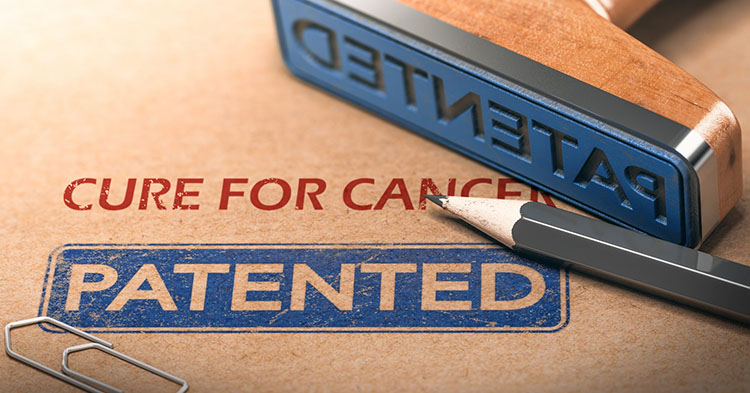
Imagine I discovered a cure for cancer. Now imagine instead of sharing it with the world, I locked it in a box and gave no one access.

Imagine I came up with a compression algorithm that could make computers store twice as much data. And imagine I locked that away, too.

This is our world. The box is called a patent office. It is used by companies and individuals to retain solitary rights to ideas for many years. It is used by patent trolls to make money. Above all else, it slows humanity down in the name of personal gain.

It could have been different. For example, what if the patent office would evaluate your idea, put a price tag on it. Whoever wants to use your idea must pay you the premium. You still gain from your idea, but humanity isn’t forced to lose it.

Some countries don’t respect patent laws. One such country is China. This led to an interesting phenomenon. It’s called copycatting.

Many of the products we know are produced, at least in part, in China. That means the factories have the plans for most products. They can manufacture those products as often as they choose.

And so, products sold on Kickstarter with a premium often pop up on AliExpress before they are delivered to Kickstarter contributors. Not only that, but they are sold for much less.

Is it a perfect system? Probably not. But neither is the patent system. In an ideal world, we’d see a solution somewhere in between. Until then? Long live the copycat!

The Punch Card Is A Lie

What are my goals in life? When I’m stuck in the day to day routine, it’s easy to lose sight of my target. How close am I to hitting my target? Am I progressing in the right direction? How can I tell? More importantly, am I measuring the right thing?

Knowing what to measure is crucial for achieving the desired goal. If we measure the wrong thing, we may achieve what is called in statistics and machine-learning as overfitting. Overfitting is when you start optimising for the thing you’re measuring instead of the end goal.

For example, if you’re measuring your employee using punch cards, they know they need to show up on time and leave on time. They’ll make sure they do that. Does that mean they’ll be more productive? No, it doesn’t.

Imagine wanting to gain weight and only measuring the quantity of food you were consuming. If you’d eat nothing but lettuce (and loads of it!), I guarantee you would not be gaining weight. Clearly measuring food quantity alone would be a poor measurement towards the goal of gaining weight.

When kids at school are measured by the results of their tests, they’ll optimise to passing their tests. Will it help them understand the material better or think for themselves? Not necessarily.

So what can we do? I have two suggestions. First, make sure you’re measuring something that has a causation relationship with your goal, not a correlation. For example, let’s say you’re running a marketing call centre. Measure your employees by the quality of their leads, not how many calls they made. If you measure the number of calls they make, they’ll try and keep their calls short so they could get more calls done. If you measure quality leads, they’ll put an effort towards making successful calls.

My second suggestion is to keep changing what you’re measuring. This is similar to testing your results against an unknown data set in machine-learning. If trying to gain weight, start measuring the number of different types of food you eat. Then, measure the number of meals. For students, we’d be better off testing them with unknown material to which they need to apply their learned knowledge.

Hopefully, with these tools, you can work more effectively towards meeting your goals. And remember: the punch card is a lie.

Put It Down And Back Away Slowly

As a developer, I am often faced with difficult problems. I sometimes find myself staring at the screen for hours trying to figure out a solution. Other times, I try tens of different approaches to solve the problem.

And then I hit a brick wall. I’m out of ideas. Nothing I try works. It seems like there simply is no way forward.

One thing works for me. Almost every single time. I take a break. I go and make myself a coffee. I take a shower. I get a good night’s sleep. I walk away from the problem for a while.

It feels counter-intuitive. All I want to do is keep bashing my head against it. But, logically, I know this just doesn’t work. I mean, I’ve already tried it for a while by that point. So I walk away. Reluctantly, mind you.

And then, something magical happens. My thoughts reorganise themselves. A picture becomes clear in my head. Suddenly, I get a new perspective. Suddenly there ARE more options. There IS a solution.

So, apparently, sometimes the solution is to give up. Not for good. Just for a short while. Interestingly, this doesn’t seem to only work for me. I’ve seen it work for colleagues and friends, too.

So the next time you’re in a rut, give this a try. Walk away. Clear your mind. After a break, come back to the problem. See if you gain any clarity. I believe in most cases you will.

Pay By Usage

Recently, my wife and I noticed we were spending most of our time on Netflix just searching for new content. With the pandemic freeing up a lot of our time, we’ve consumed all the interesting content. We also have Amazon Prime, so we’re in no rush to watch content that isn’t exciting for us.

The solution was simple. We froze our Netflix account for a few months. That gave Netflix enough time to refresh their content, while we weren’t paying for… Well… Nothing.

When enough content was added to Netflix, we renewed our subscription. Following this pattern every few months can easily reduce the overall cost of having Netflix by half.

Check your current subscriptions. How many of them do you keep paying for just by force of habit? See if you can freeze some of them, if they don’t offer immediate value. You can always resume your services when you need them again.

Cover image credit: Akhil Arora/Gadgets 360